

Municipal Culvert Inspection: How a CMMS Turns a Regulatory Obligation into an Operational Advantage
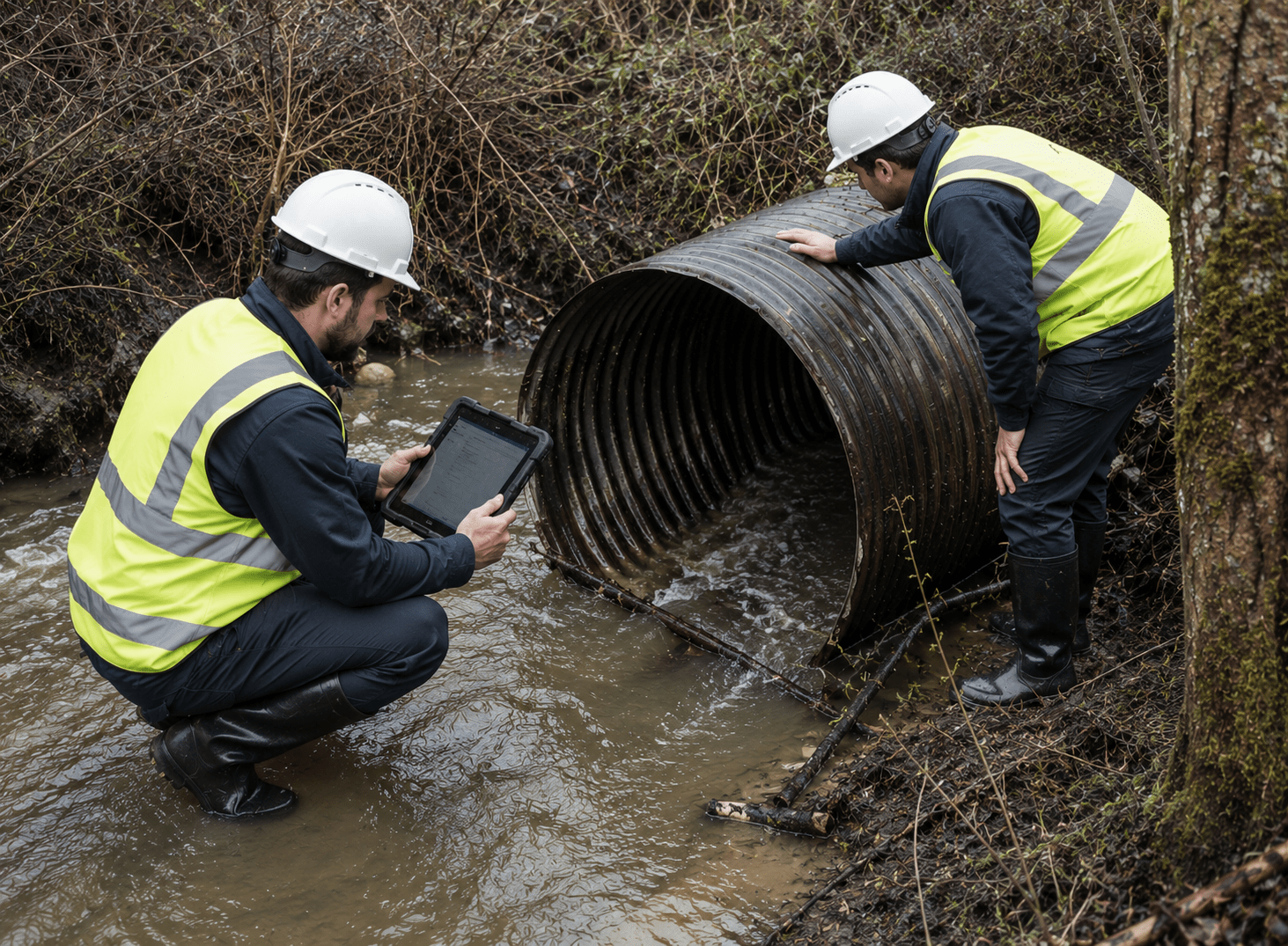
A failing culvert means a collapsing roadway, a cut-off road, and in the worst cases, a risk to public safety. Quebec municipalities manage hundreds, sometimes thousands of them, often buried for decades under embankments that no one thinks to inspect until the problem becomes visible.
Yet culvert inspection is not optional. It falls under a framework set by the Ministère des Transports et de la Mobilité durable (MTMD, Quebec’s Ministry of Transport and Sustainable Mobility), with accredited inspectors, a standardized methodology, and a condition index that determines eligibility for certain financial assistance programs. For municipal road departments, it is also one of the most demanding tasks to document properly, and one of the most vulnerable when it still relies on paper forms and binders.
This is why the culvert inspection module is among the most valued features of Maintenance Directe among our public sector clients.

Why Culvert Inspection Is a Critical Issue for Municipalities
A culvert performs two functions at once: it supports the roadway and it drains water. A failure therefore affects both the structure and the hydraulics of the asset at the same time.
Two areas of assessment follow from this:
- Structural defects: metal corrosion, concrete cracking or spalling, deformation, scouring at the ends. These defects affect load-bearing capacity and can eventually lead to roadway collapse.
- Hydraulic capacity: obstructions, breaks, or settling that reduce flow and cause overflows, with a risk of roadway failure during heavy rainfall.
Without a structured process, these two dimensions are difficult to track over time. A paper form filled out once every few years does not allow the progression of a defect to be compared, nor does it allow objective prioritization of interventions across a network of several hundred structures.
What the MTMD Regulatory Framework Requires
Municipalities that have their culverts inspected, particularly under financial assistance programs for local road networks, must follow the parameters set out in the Manuel d’inspection des ponceaux (Culvert Inspection Manual) published by Quebec’s Ministry of Transport.
Rigorous Inspector Accreditation
In Quebec, culvert inspection must be carried out by accredited professionals. Only three institutions offer this specialized training: Université Laval, Université de Sherbrooke, and Cégep de Trois-Rivières. Accreditation is valid for three years, ensuring assessments that meet the Ministry’s requirements.
The Culvert Condition Index (IEP): Quantifying Deterioration
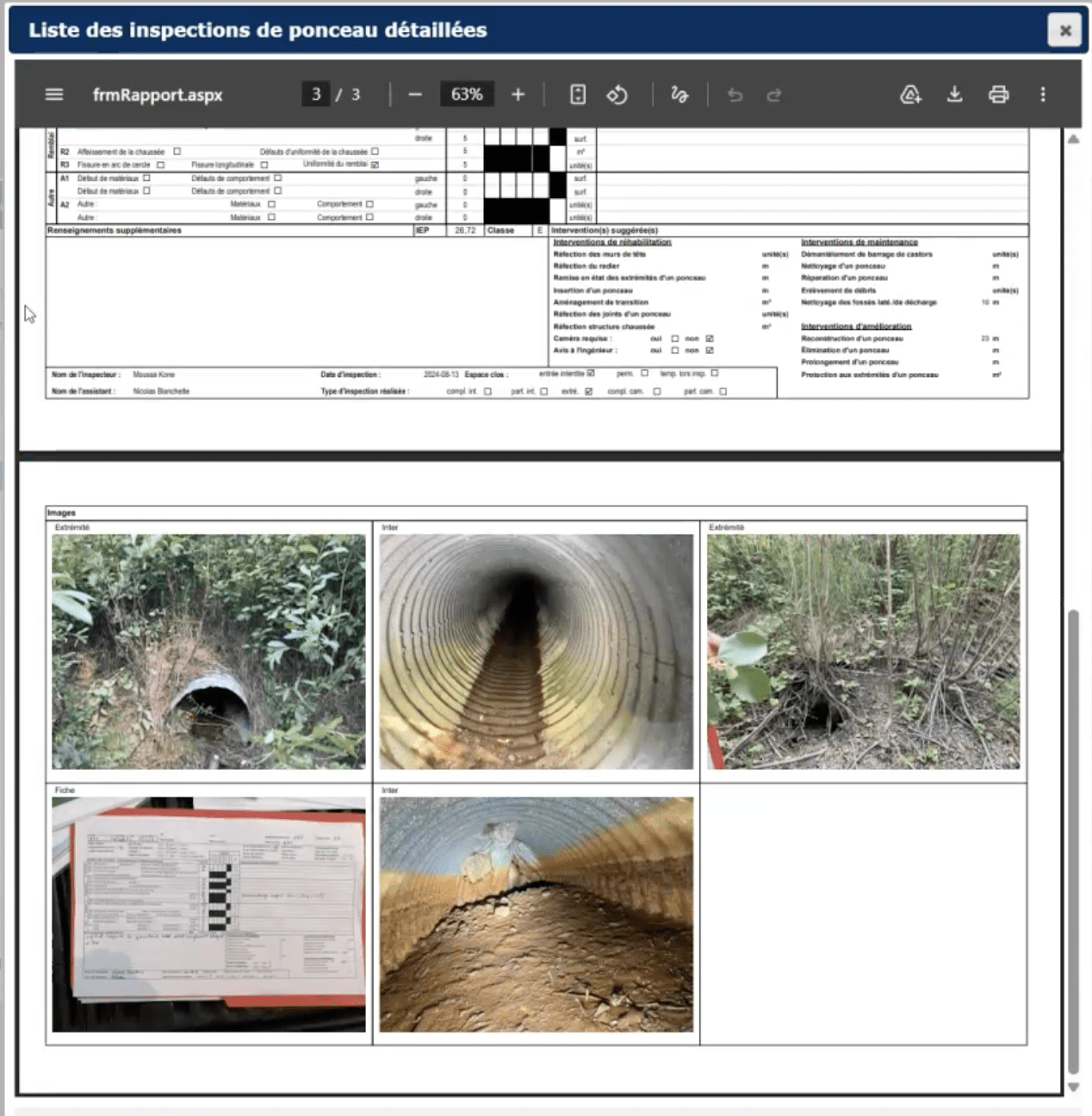
Each defect (cracking, deformation, scouring, corrosion, obstruction) is weighted according to its severity and location to calculate the Condition Index (IEP) out of 100 points:
- Class A (86 to 100): Excellent condition.
- Classes B and C (56 to 85): Minor to moderate deterioration (preventive maintenance).
- Classes D and E (0 to 55): Poor to critical condition (rehabilitation or replacement).
- Class X: Imminent danger. Triggers an immediate emergency intervention for user safety, regardless of the overall score.
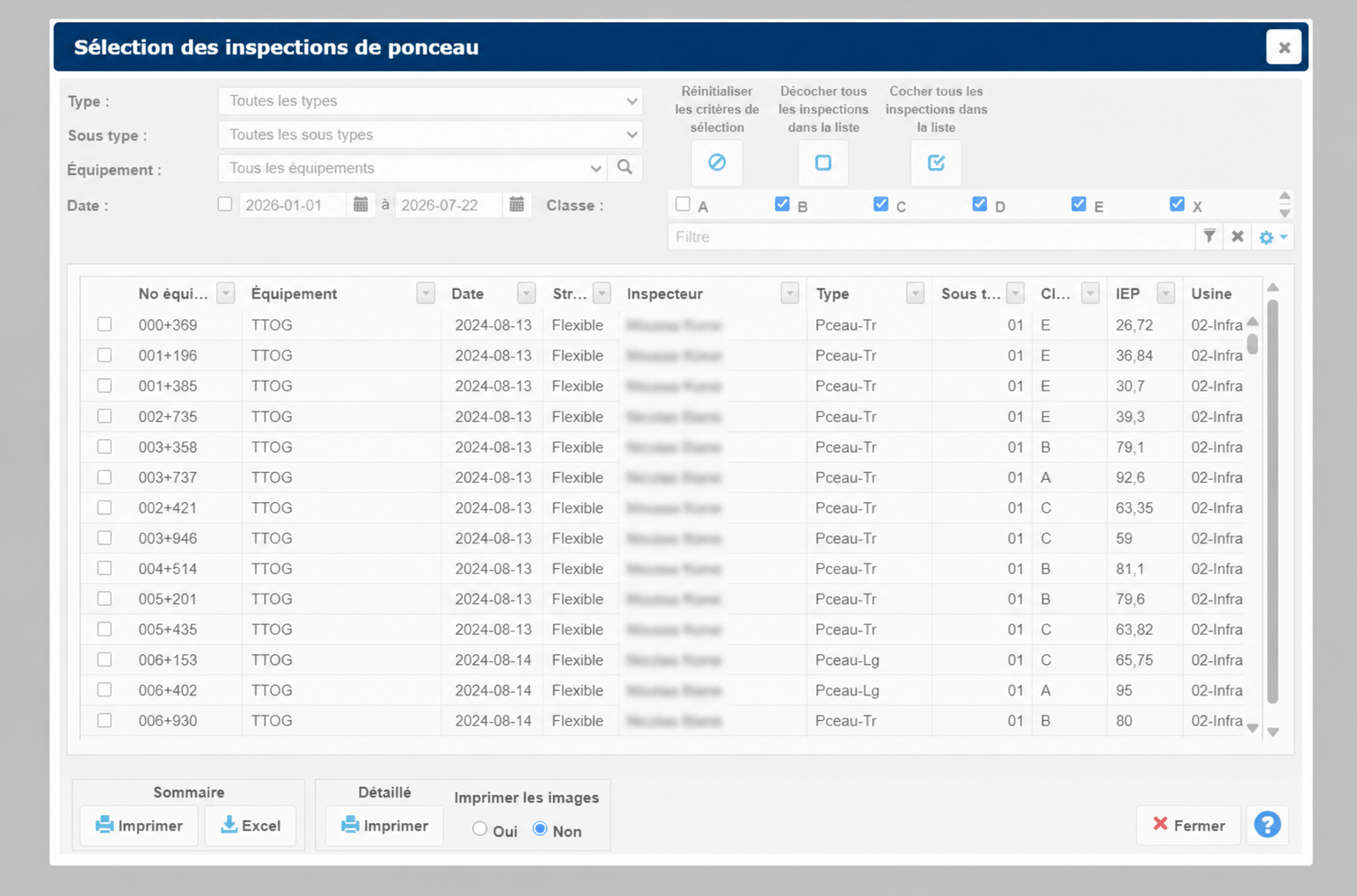
This index provides an objective overview to prioritize work and support funding applications.
Recommendations and Follow-up via the CMMS
Every report results in a clear recommendation (monitoring, maintenance, repair, or replacement) along with a level of urgency.
The municipal challenge lies in managing this data: producing structured, defensible information year after year in case of an audit. This is where a CMMS (Computerized Maintenance Management System) comes in. It centralizes asset history, automates the preventive maintenance schedule, and helps optimize the three-year capital plan (PTI).
A Typical Scenario: From Paper Form to Digital Dashboard
This scenario is representative of what we observe across several client municipalities, without referring to a single specific case.
A mid-sized municipality manages about 300 culverts across its local road network. Historically, inspections were recorded on paper forms filled out in the field, then transcribed into an Excel spreadsheet by the technician back at the office. Photos, taken on a personal phone, were sent by email and manually filed into folders by year.
The result: data scattered across three systems, no deterioration history that could be reviewed at a glance, and an annual report preparation process that took several days of compiling before each funding application was submitted.
With a CMMS built around standardized inspection forms, the municipality was able to:
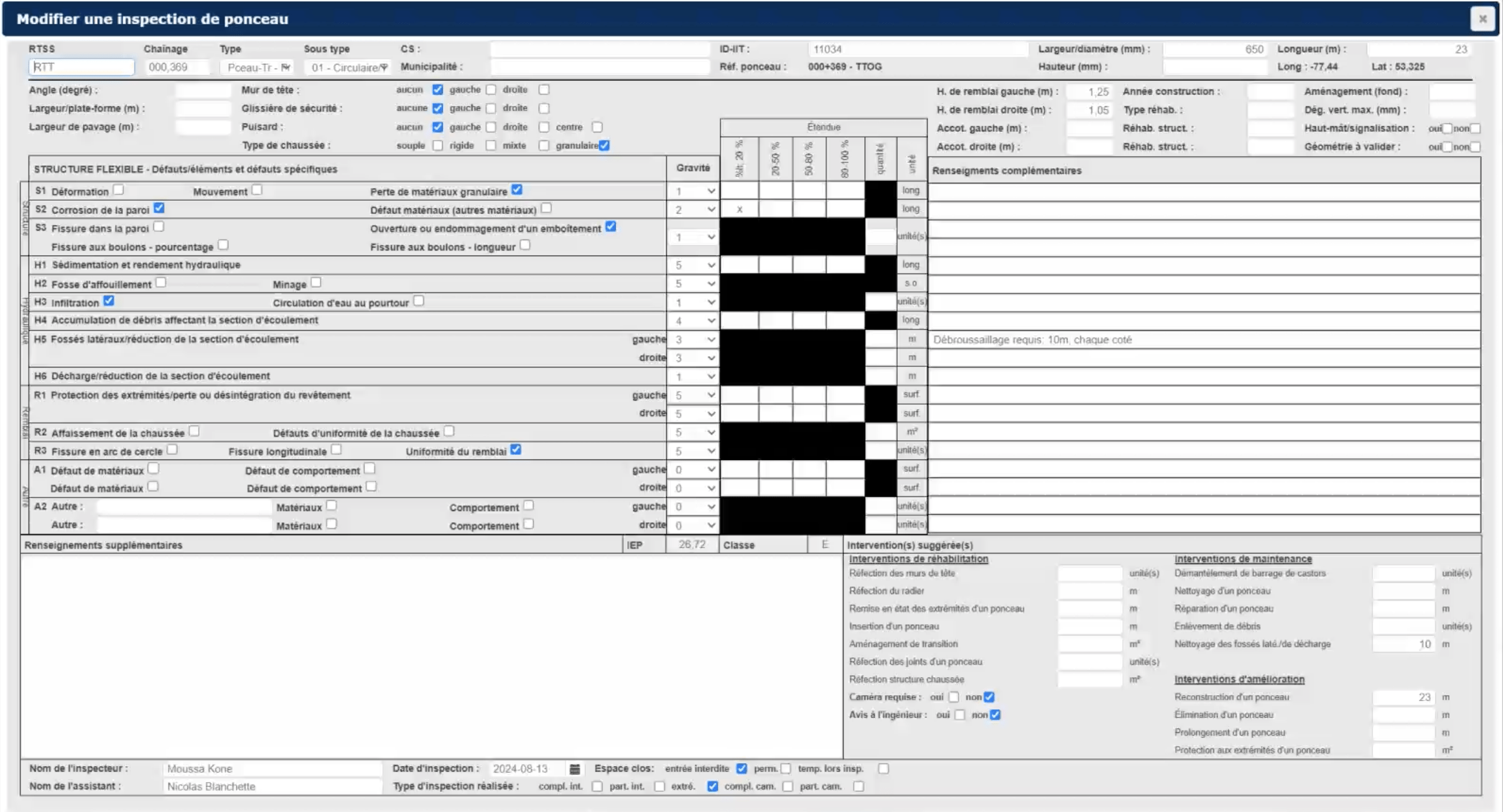
- Digitize the MTMD inspection form directly in the mobile app, using the same defect categories as the official form.
- Automatically geolocate each culvert at the time of inspection, eliminating identification errors between similar structures.
- Attach required photos directly to the inspection work order, time-stamped and linked to the structure’s tamper-proof history.
- Generate the complete history of each culvert across multiple inspection cycles, to track how a defect has progressed over the years rather than starting from scratch at every inspection.
- Extract a structured report at the time of the funding application, rather than reconstructing the data by hand.
How Maintenance Directe Supports Culvert Inspection Day to Day
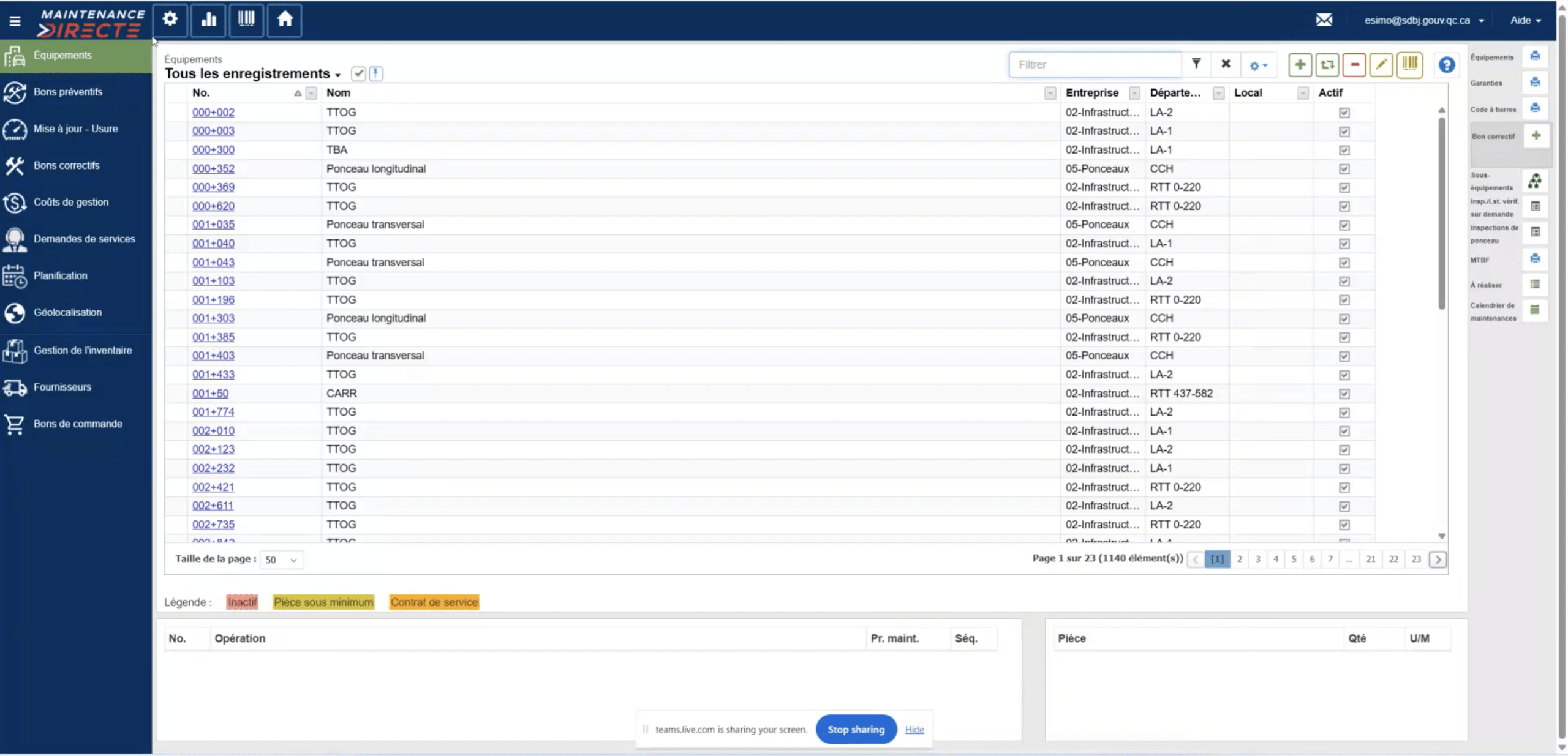
In practice, the culvert inspection module builds on the MD-OPT features already present in the platform:
Structured inspection forms. Defect categories (structural and hydraulic) are configured to match the grid in the Culvert Inspection Manual, eliminating the need to re-enter data in a different format afterward.
Integrated geolocation. Each inspection is automatically linked to the GPS coordinates of the structure, addressing a particular challenge for culverts that are often hard to pinpoint precisely on a municipal map.
Mandatory photos and videos. Capture is built directly into the inspection form, providing irrefutable visual evidence for audits and deterioration tracking. Thanks to AI image analysis, a descriptive narrative can be generated automatically from the photos, which the technician validates before it is added to the report, in line with our principle: AI suggests, your team decides.
Tamper-proof history. Every intervention, every inspection, and every photo remain time-stamped and accessible at all times, which greatly simplifies demonstrating compliance during an audit or an incident.
Alerts and prioritization. The system can flag upcoming re-inspection deadlines and highlight structures whose condition index has deteriorated, directing maintenance budgets toward actual priorities rather than the chronological order of files.
Full field access. Inspectors work directly from their tablet or phone, with no need to return to the office to re-enter data, a time savings that is especially valued by road crews covering large rural territories.
Why This Feature Is Among the Public Sector’s Favorites
Three reasons come up regularly among our municipal clients.
First, pricing per asset, rather than per user, makes it possible to add as many inspectors, foremen, and managers as needed at no extra cost, a direct benefit for road departments where several people consult the same structure records.
Second, data hosting in Canada and compliance with Quebec’s Law 25 directly address the governance requirements of public bodies, which cannot always afford to host their critical infrastructure data outside the country.
Finally, centralizing technical know-how protects municipalities from the loss of knowledge when staff retire, a particularly acute issue in road departments where a single accredited inspector sometimes alone carries the institutional memory of the network’s condition.
Structure Your Culvert Inspections Before the Next Rainy Season
emergency replacement costs several times more than planned maintenance, and a public safety risk, since a failure can occur without warning.
Maintenance Directe helps municipalities structure their culvert inspections, from the field form to the compliance report, in a single platform accessible on all devices.
Beyond the Software: Turnkey Services and Custom Development
We don’t just hand over a login ID. Maintenance Directe provides comprehensive, turnkey support tailored to your resort’s unique infrastructure.
1. Custom Software Solutions
We specialize in designing and integrating custom software solutions tailored to centralize your operations. Our platforms ensure that the right metrics reach the right stakeholders at precisely the right time.
We excel at integrating powerful ERP solutions such as SAP Business One, as well as industrial control and data acquisition platforms like IGNITION. This seamlessly connects your snowmaking system, ski lifts, and management software into a unified ecosystem.
2. Dedicated Hands-On Training
(An optional service available with your CMMS solution)
Training your teams connects sustainability, human capital, and overall performance—fostering shared expertise, empowered technicians, and streamlined operations.
Proper human resource management is critical to the long-term viability of your preventive maintenance program and broader maintenance operations. Well-trained teams adopt the system faster, more effectively, and for the long run.
Short on time or resources?
We offer full end-to-end support for your team: inventory management, data setup, installation, configuration, and training.